What’s inside a battery energy storage system?
Battery energy storage systems are made up of many individual lithium-ion battery cells, which are grouped into modules and installed on racks inside of durable, weatherproof metal containers (also called enclosures). The enclosures are typically 30 to 50 feet long, five to ten feet wide, about ten feet tall. The batteries and control systems are accessible from the outside via a cabinet-style design. Each container is typically capable of storing four to ten Megawatt-hours (“MWh”) of electricity.
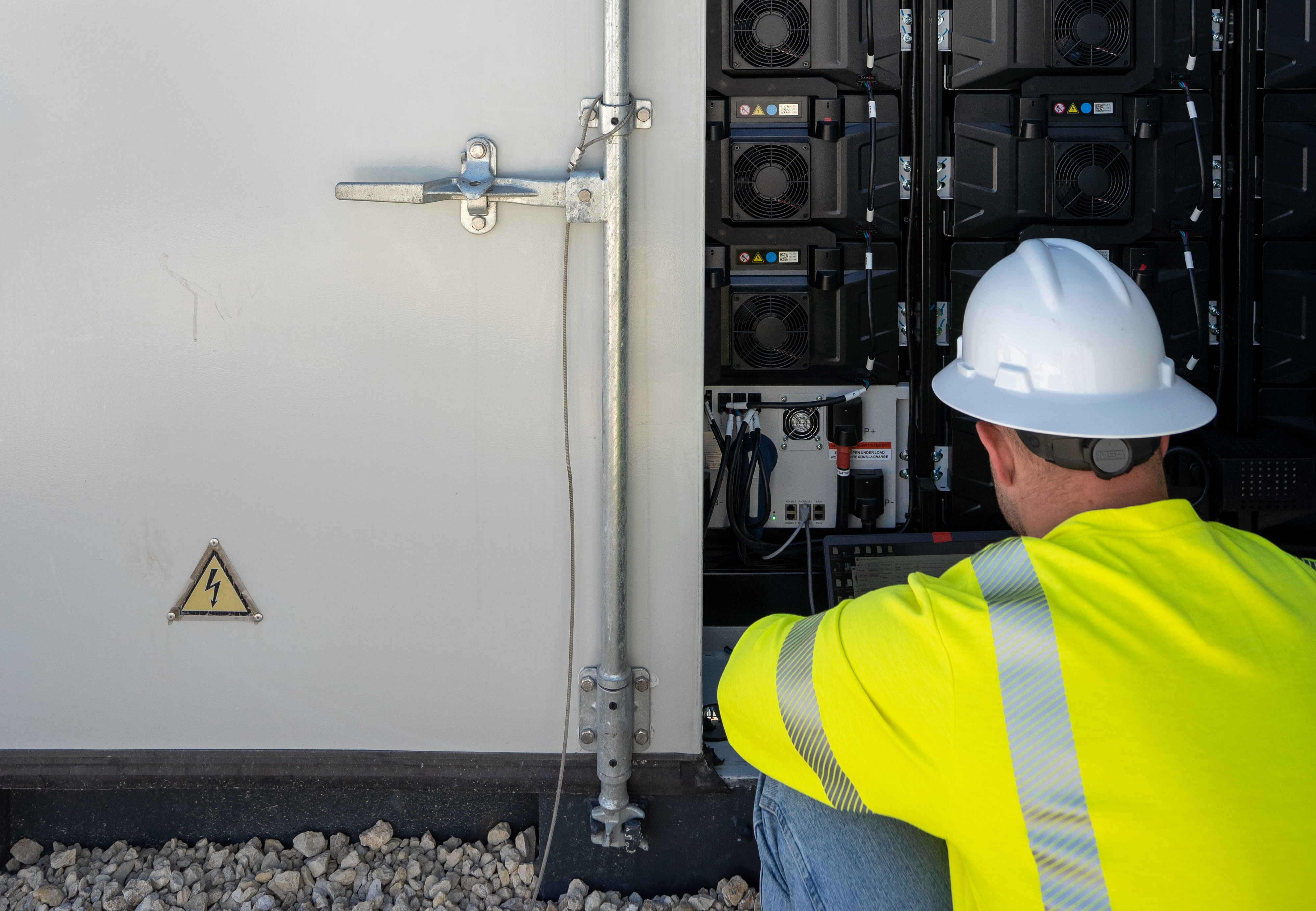
Photo above: Construction personnel check system performance during commissioning.
How does it work?
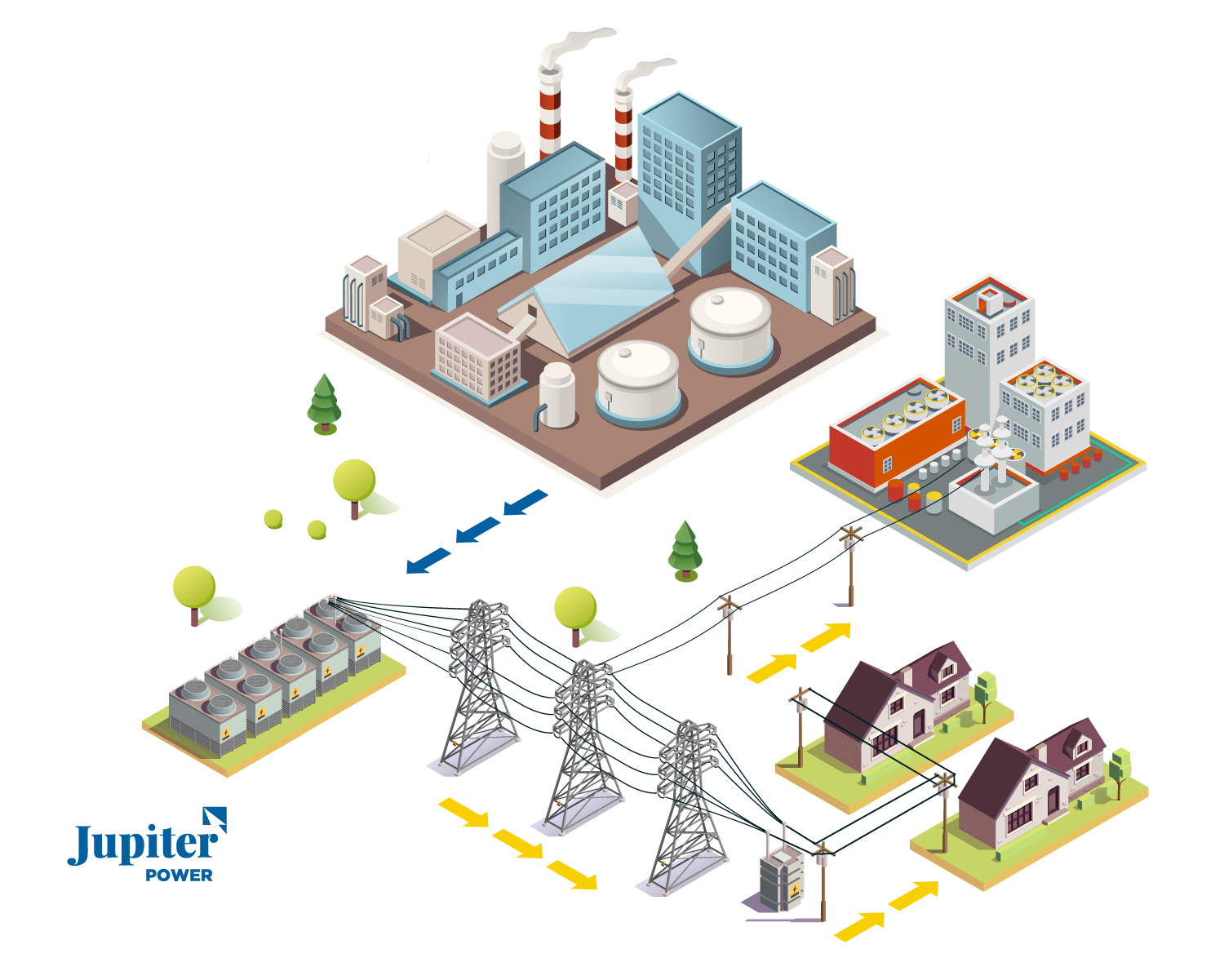
Typically, a stand-alone battery energy storage system connects to the wider power grid at an electric substation. The electricity used to charge the batteries is generated by other power plants that are injecting electricity onto the grid when the battery charges. The batteries charge when there is extra power available on the grid, like overnight, and especially when customers do not need or cannot get that power, due to transmission limitations. When the batteries discharge, or put power back onto the grid, it is delivered to the customers who are using power at that time, and especially at times of peak customer use. The batteries provide electricity when customers need power most, like on hot days when the air conditioning is running.
How does it improve the delivery of electricity?
A battery storage facility provides increased energy capacity, peak shaving, voltage support, and frequency regulation—all of this means that a battery storage facility has the power and unique characteristics to make the grid perform better, by providing all those different supporting functions. Battery energy storage facilities can operate like gas peaker plants, but even faster, providing instantaneous power to the grid when it needs it the most.
How is the facility operated?
Once construction is complete and the facility is operational, there will be little noticeable activity at the site. Facility personnel will be present at the facility routinely to ensure smooth operations, inspect the equipment, run diagnostic checks, and maintain the landscaping. In parallel, the facility will be remotely monitored 24/7 through state-of-the-art technology, including alarms and safety systems.
Jupiter expects no observable increase in traffic, no dust, glare, waste, or water use once construction of the facility is complete. Under normal operations, the facility will produce little noise and no regular nighttime lighting is planned. Operations will comply with all local, state, and federal ordinances and regulations.
Jupiter expects no observable increase in traffic, no dust, glare, waste, or water use once construction of the facility is complete. Under normal operations, the facility will produce little noise and no regular nighttime lighting is planned. Operations will comply with all local, state, and federal ordinances and regulations.